
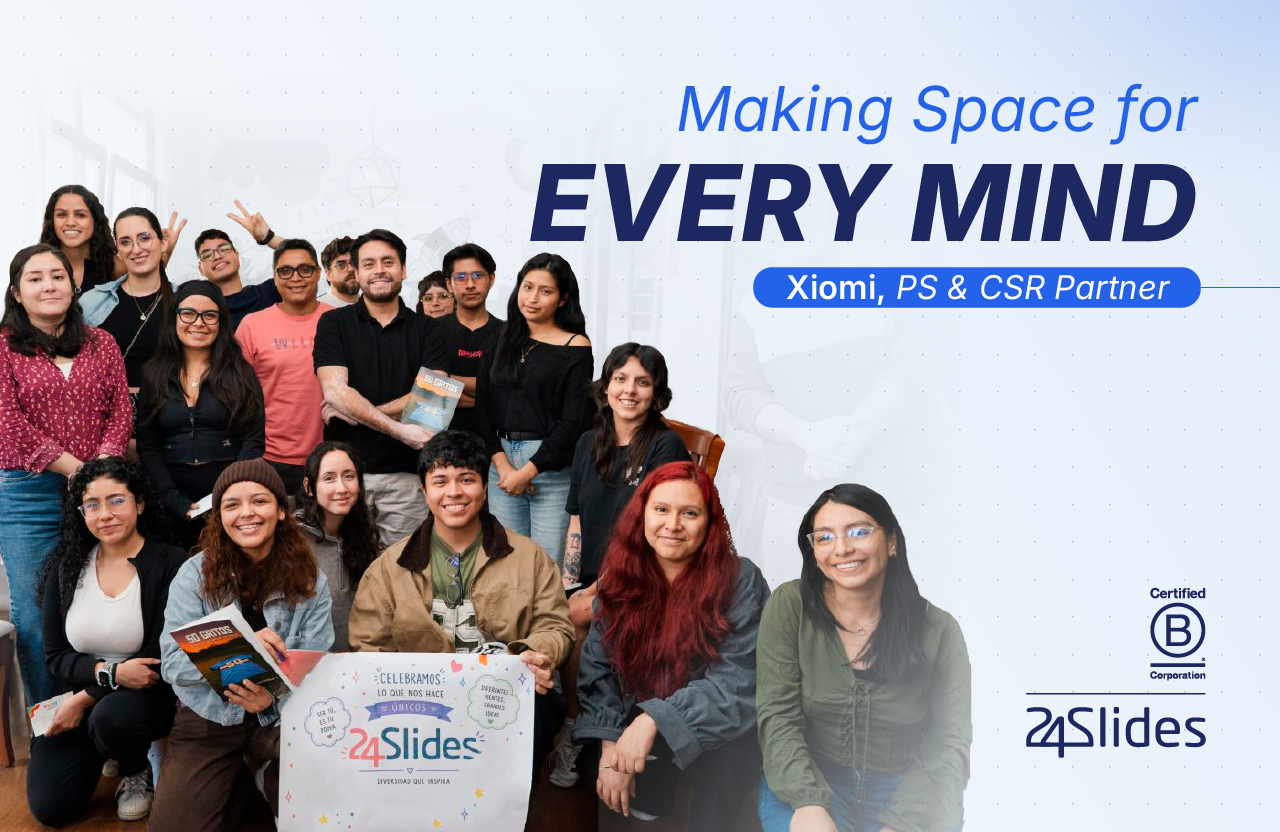
This article was written by Xiomi, our People Success & CSR partner in Lima, Peru.
When I first envisioned bringing a dedicated Neurodiversity Awareness session to our team at 24Slides, my goal was clear: I wanted to foster inclusion at every level of our organization. As someone passionate about organizational psychology, I’m deeply driven by how humans interact, process information, and build psychological safety within work environments. I know I’m not a clinical psychologist, but these core concepts—empathy, cognitive diversity, and human-centered design—are what fuel my everyday life.
When Neurodiversity Pride Day approached on June 16, I knew I wanted to do something meaningful for our team at the Lima office. But like many passion projects, I was working with limited resources.
That’s when Psychologist Katherine Patricia Lecaros Marquez and Communications Specialist Diego Martínez Cluzet stepped up.
Without a dedicated budget, they generously offered their time, deep expertise, and passion to lead our session. Their willingness to share their knowledge purely out of a shared belief in building a better, more empathetic workplace was incredible—and it reminded me of the true spirit of our team.
The Realization: Challenging Our Everyday Assumptions
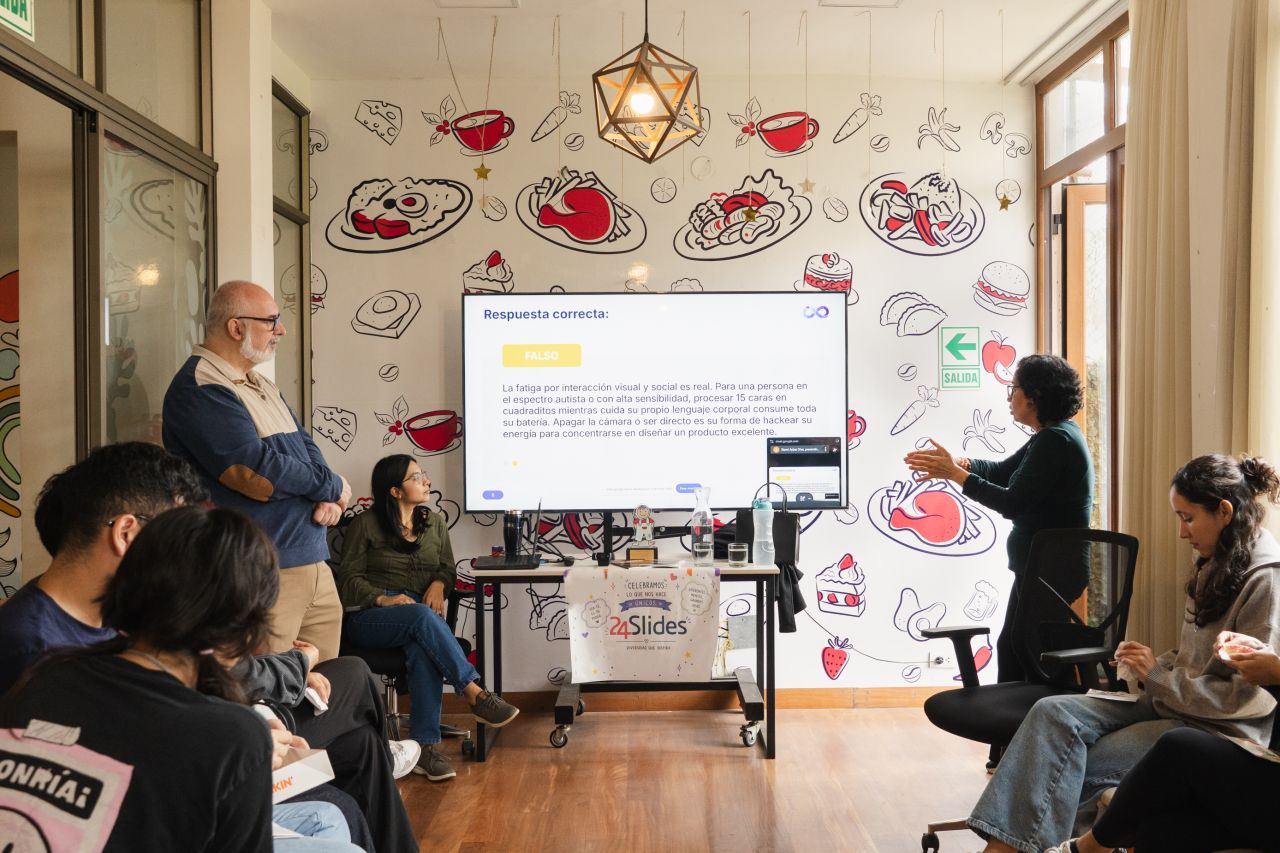
The energy in the room during the talk was tangible. Katherine and Diego didn’t just present theory; they used real-world scenarios and clever tech metaphors—like system architecture, RAM, and background processing threads—that immediately clicked with our creative and technical teams.
Together, we walked through everyday workplace behaviors that are so often misunderstood:
- The 45 open Chrome tabs and background music aren’t a sign of chaos—they reflect how an ADHD brain manages multi-threaded creative processing to make unexpected design connections.
- Reaching for noise-canceling headphones isn’t a lack of discipline—it’s a conscious strategy to manage sensory inputs and free up mental bandwidth for complex tasks.
- Asking for written bullet points instead of vague verbal briefs isn’t a lack of creative vision—it’s how a hyper-logical, structured mind ensures absolute precision in execution.
- Doodling during a briefing isn’t boredom—it’s a tactile anchor that helps process heavy verbal information in real time.
We explored how Judy Singer’s concept of human “biodiversity” applies directly to our work. Just as an ecosystem thrives on diversity, a company thrives when it embraces different cognitive architectures—whether that’s the 3D spatial rendering power of dyslexia, the deep user empathy of High Sensitivity (PAS), or the clean, hyper-logical processing of the autistic spectrum.
The Impact: A Shift in Perspective
The feedback following the session was overwhelming. Team members shared that the talk was not only deeply interesting, but genuinely worth their time. People began reflecting on how they interpret their teammates’ daily habits, moving from judgment to curiosity and empathy.
For me, seeing the team engaged, asking questions, and connecting with these concepts made all the effort worthwhile. It proved that real inclusion is about open conversations, genuine vulnerability, and a shared commitment to learning.
Where We Go From Here: Scaling Globally
Building an inclusive workplace is an ongoing journey that extends far beyond a single office or region. What started as an inspiring session in our Lima office has sparked a broader ambition: turning this into a global awareness initiative across all our international locations.
In collaboration with our dedicated Global CSR team, we are working to scale these learning opportunities company-wide. As a B-Corp, we view neurodiversity and psychological safety as essential pillars of our ESG commitments. By connecting our global teams around these topics, we ensure that we aren’t just building local awareness, but actively learning from each other’s diverse perspectives across regions.
Moving forward, we are focusing on turning the insights from the talk into daily practices across all our global teams:
- Communicating with Clarity: Setting explicit, structured expectations instead of relying on ambiguous jargon.
- Listening Before Assuming: Asking teammates about their preferred working styles rather than misinterpreting their habits.
- Respecting Diverse Environments: Focusing on output and quality rather than rigid rules on how or where people focus best.
- Practicing Empathy Daily: Ensuring that no one feels the need to “edit” or mask their authentic working style to feel valued.
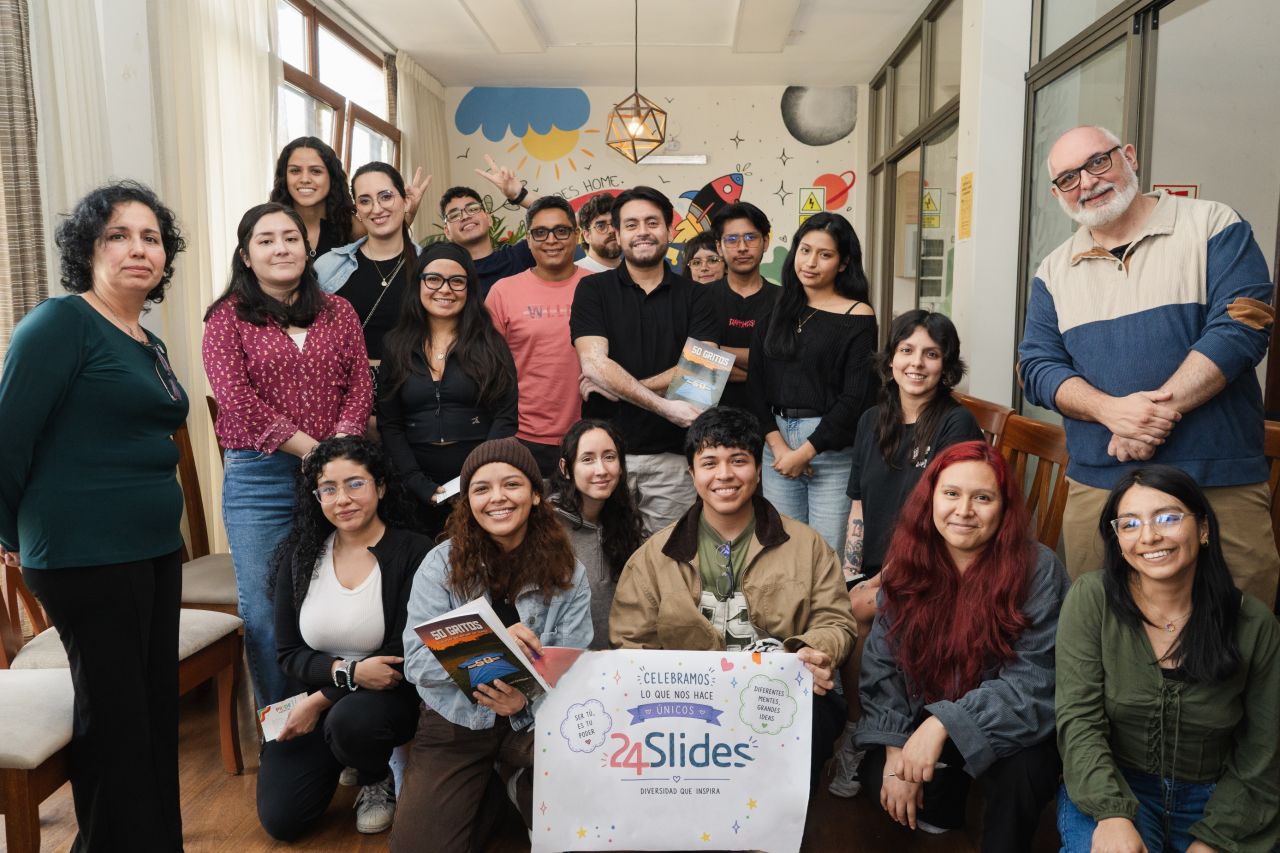
I am immensely grateful to everyone for bringing their hearts and minds to this session, and to our global CSR team for helping us carry this vision forward as we continue building an empathetic, neuroinclusive workplace worldwide.