
This article was written by Louise Holk, our Chief Impact Officer at 24Slides
ESG has become one of those business terms that’s everywhere. It’s discussed in boardrooms, annual reports, and business headlines, yet I often find that people aren’t entirely sure what it means in practice. Many still associate ESG with reports, policies, or complex frameworks reserved for large corporations.
As Chief Impact Officer at 24Slides, I’ve come to see ESG quite differently. To me, it’s much more practical—and much more human. It’s about the choices we make every day: how we support our people, engage with our communities, care for our environment, and hold ourselves accountable as a business.
For us at 24Slides, ESG naturally connects with how we work, grow, and collaborate across our teams and communities. Because ultimately, creating positive impact isn’t about a single report or project—it’s about building responsible practices into the way we do business every day.
More Than Three Letters
Of course, ESG stands for Environmental, Social, and Governance. These three pillars help businesses measure and guide responsible practices—from reducing environmental impact, to investing in people and communities, to building transparent and accountable organizations.
But I’ve never thought of ESG as three separate boxes to tick. To me, they’re three different ways of asking the same question: How can we build a business that creates a positive impact while growing responsibly?
Frameworks and metrics certainly have their place, but they’re only the starting point. The real value of ESG comes from how those principles influence the decisions we make every day.
Turning Principles into Real Actions
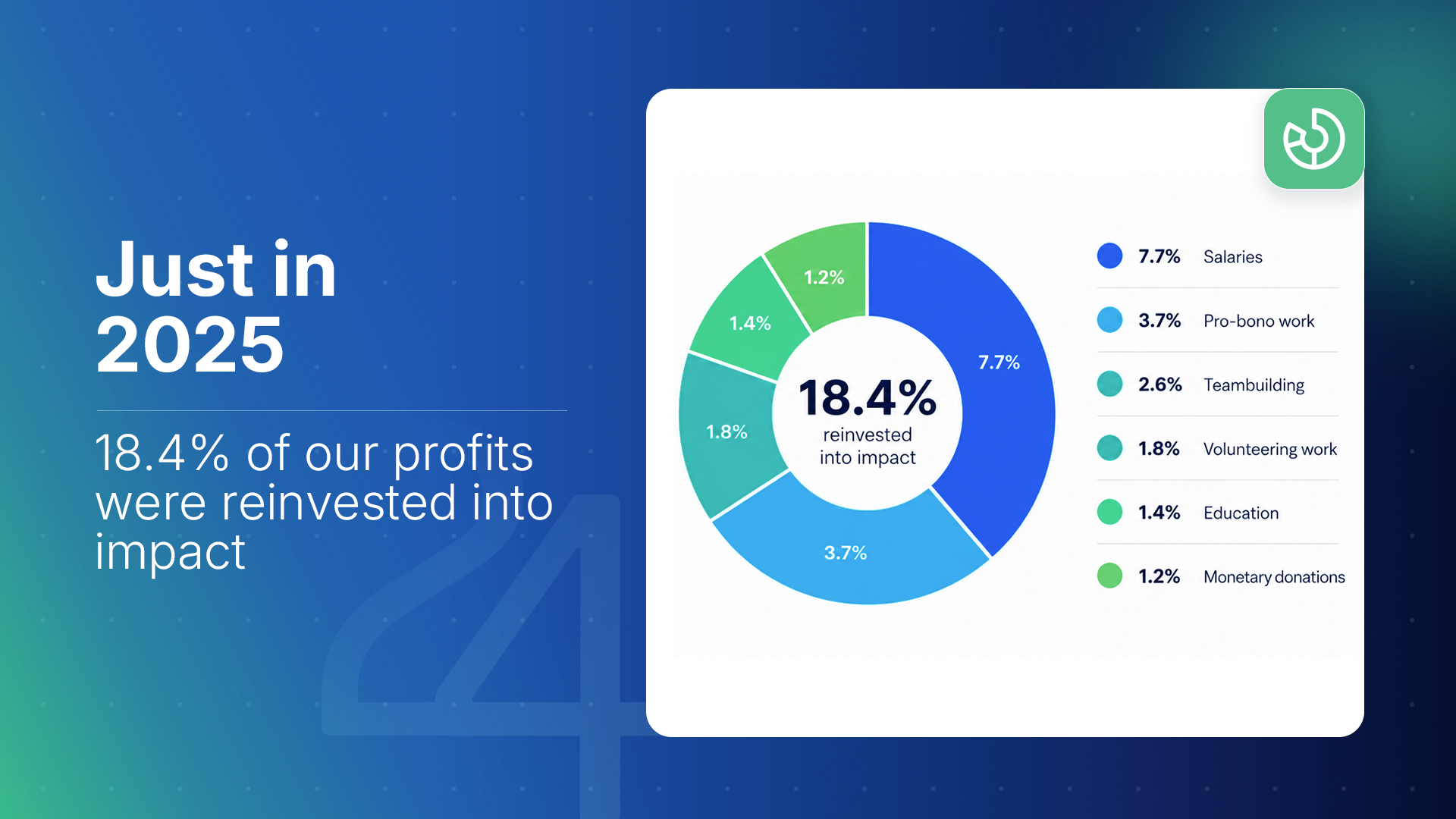
People often ask me what ESG looks like in practice. My answer is that it rarely comes down to one big initiative. More often, it’s reflected in the choices a company makes over time—where it invests, how it supports its people, and the values that guide its decisions.
At 24Slides, we strive to make those principles part of our everyday work. ESG gives us a useful framework for reflecting on where we’re making a positive impact—and where we still have opportunities to do better. We certainly don’t have all the answers, but I’m proud of the progress we’ve made and the way our values continue to shape how we grow as a company.
Environmental: Doing Our Part as a Digital Company
One thing I’ve learned is that environmental responsibility looks different from one business to another. Because we’re a digital company, our environmental footprint isn’t the same as a manufacturer or a logistics company—but that doesn’t mean we don’t have a responsibility to do our part.
For me, the environmental pillar of ESG is about being conscious of the impact we do have and looking for practical ways to improve it. That’s why we’ve introduced initiatives like the Carbon Hero program, which encourages more sustainable commuting through co-riding and shared transportation.
We’ve also celebrated Green Awareness Month across our offices, using it as an opportunity to promote more responsible use of everyday resources—from energy consumption to reducing unnecessary waste. These aren’t sweeping transformations, but they’re meaningful reminders that sustainability is built through awareness, shared responsibility, and small actions repeated over time.
Social: Investing in People
If there’s one pillar of ESG that feels especially close to my heart, it’s the social one. At its core, it’s about people—creating opportunities to grow, offering support when it’s needed most, and using our skills to make a positive difference beyond our own business.
One initiative I’m especially proud of is 24Academy, our free learning platform designed to make professional development more accessible. What started with a single course on presentation design has grown into a broader learning platform featuring courses and partnerships focused on communication, AI literacy, entrepreneurship, English, and other marketable skills. For me, 24Academy reflects a simple belief: education can open doors, and businesses have an opportunity to help make that happen.
Supporting people also means recognizing that life doesn’t always go according to plan. That’s why we introduced an interest-free Emergency Loan Program for employees facing unexpected financial hardship. With around 90% of our workforce based in emerging markets, access to affordable financial support can make a meaningful difference. It’s a simple initiative, but one that reflects our commitment to putting people before profit.
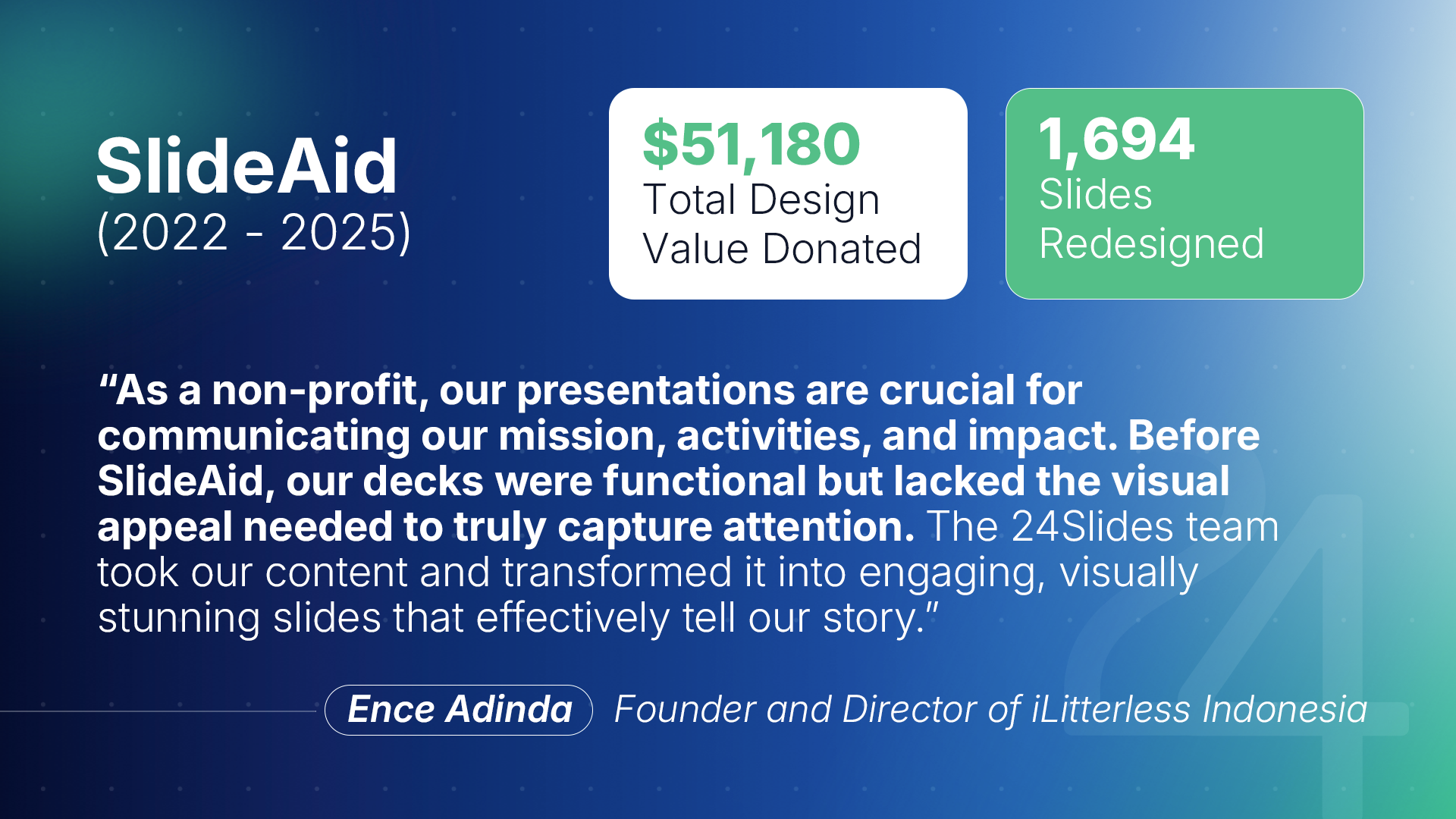
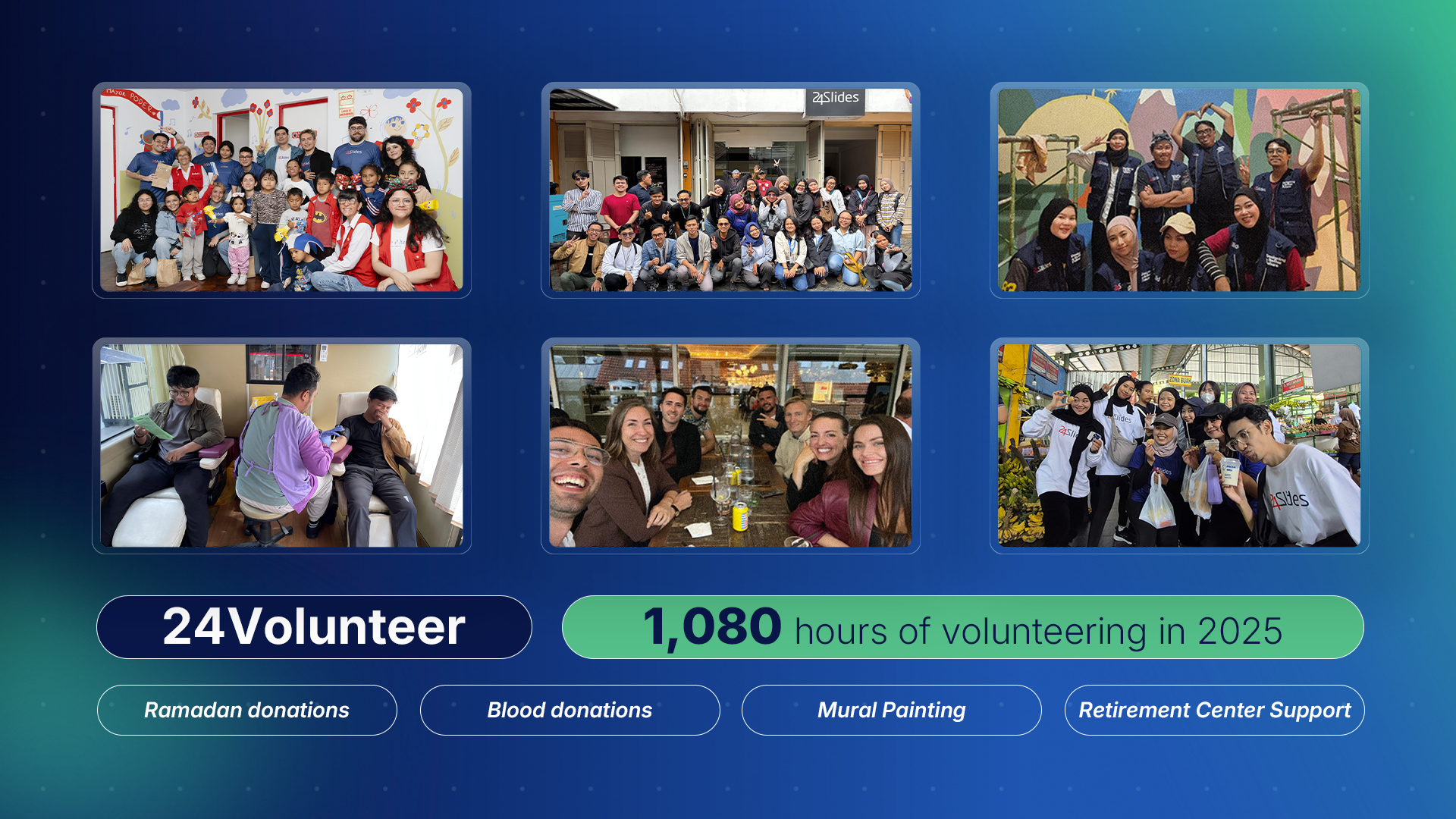
Our responsibility doesn’t stop at our own teams. Through SlideAid, we provide pro-bono presentation design support to NGOs and nonprofit organizations, helping them communicate their missions more effectively. Together with initiatives like 24Volunteer, blood donation drives, and local community partnerships, these efforts remind me that the skills we use every day can also be a force for good.
Governance: Creating the Foundation for Impact
Governance isn’t always the most visible part of ESG, but I believe it’s what allows the other two pillars to thrive. It’s about creating the structures, policies, and values that help a company make responsible decisions—not just once, but consistently over time.
At 24Slides, one important milestone on that journey was becoming a Certified B Corporation. For me, that certification isn’t the finish line; it’s a reminder to keep challenging ourselves and to hold our business to high standards of accountability, transparency, and positive impact.
Strong governance also means creating an environment where people feel respected and included. That’s why our Diversity, Equity & Inclusion (DE&I) Policy is such an important part of how we work. With colleagues across different countries, cultures, and religious backgrounds, having shared principles helps us foster a workplace where everyone has the opportunity to contribute, grow, and feel a sense of belonging.
Ultimately, good governance isn’t about policies sitting on a shelf. It’s about creating a strong foundation that helps positive intentions become lasting practices.
Small Actions Create Long-Term Change
Working in impact has taught me that ESG is often discussed through frameworks, reports, and metrics—but at its heart, it’s really about people and the choices businesses make every day.
At 24Slides, we don’t see ESG as a separate business objective, but as an ongoing commitment to growing responsibly while creating positive impact along the way. Whether through education initiatives, community programs, sustainability efforts, or employee development, these actions reflect our belief that businesses can contribute to something bigger than themselves. Over time, they also help build stronger organizations—creating workplaces, partnerships, and communities that can thrive together.
Ultimately, meaningful impact isn’t created through a single initiative. It’s built gradually, through consistent actions and a willingness to keep learning along the way.
Interested in the business side of purpose? Read how being purpose-driven helps strengthen partnerships and build long-term resilience.