What Is Brand Management? Core Principles, Frameworks, and Examples

Brand Management is the continuous strategic process of building, maintaining, and growing a company's financial and perceptual value over time. It moves beyond initial logo creation to actively manage tangible visual assets, corporate reputation, and emotional market associations. The ultimate goal is to maintain absolute consistency across every internal and external touchpoint to protect brand equity, drive customer loyalty, and ensure long-term business growth.
Anyone can design an attractive logo, but it takes profound discipline to build a brand that people genuinely trust. Your brand is the most powerful financial engine your company owns, acting as an invisible force that attracts the right customers and repels competitors.
Whether you are bringing a disruptive new startup to life or guarding the reputation of a multinational enterprise, this guide reveals the exact frameworks, practical steps, and real-world strategies you need to transform a simple business into an iconic market leader.
Let’s dive in!
TL;DR: Content Summary
- Brand Management vs. Marketing Management: Brand Management establishes the strategic "True North" of your company, while Marketing acts as the tactical engine that drives short-term campaigns. Marketing must always operate strictly within the boundaries set by Brand Management to ensure brand equity is never diluted.
- Why is Brand Management Important for Business Growth?: Effective Brand Management is a powerful financial driver. By building consistent brand perceptions and strengthening customer loyalty, it actively reduces your Customer Acquisition Cost (CAC) and increases Customer Lifetime Value (LTV). It also creates differentiation, giving you the pricing power to charge premium rates while protecting the overall valuation of your brand equity.
- What are the Key Elements of Brand Management?: A category-leading brand operates as a cohesive business system. It requires sharp Brand Positioning to claim a unique mental territory, a structured Brand Identity (visual and verbal), and absolute Brand Consistency. Above all, the Brand Promise you communicate must perfectly match the actual Brand Experience the customer receives.
- What are the Different Types of Brand Management?: As organizations scale, branding divides into specialized branches. Strategic Brand Management focuses on long-term value, while reputation management protects market trust. Meanwhile, asset management centralizes corporate design files, digital management controls online ecosystems, and portfolio management organizes multiple brands to prevent internal sales cannibalization.
- The Core Framework (3Cs and 5Ps): Top Brand Managers rely on two frameworks to stay aligned. First, you define your strategy (where to play) using the 3Cs: Customer, Company, and Competitor. Then, you execute your tactics (how to win) using the 5Ps: Positioning, Promise, Personality, Presentation, and Performance.
- How Does Brand Management Work in Practice?: The operational process takes six steps. You must audit the market, claim a "Winning Zone" where your strengths meet customer needs, and build a strict Corporate Visual Identity (CVI). After executing an omnichannel brand activation, you must measure your success using KPIs like Share of Voice (SOV) and Net Promoter Score (NPS) to manage the brand's ongoing evolution.
- Real-World Brand Management Examples: In this section, you'll learn how global leaders use Brand Management strategies to solve real business challenges. Apple applies strategic management to maintain a high-margin premium ecosystem. Airbnb protects its reputation through strict operational changes rather than just PR. Finally, P&G masters portfolio management by giving each brand a distinct role to prevent internal sales cannibalization.
- How Presentations Drive Effective Branding?: Presentations are everyday brand assets that shape corporate perception. Polished sales pitch decks build immediate external trust, while well-designed onboarding slides strengthen internal branding. Using strict corporate templates ensures all departments stay on-script, preventing inconsistent designs that dilute your brand image.
What is Brand Management?
Brand Management is the strategic process of building, maintaining, and growing the financial and perceptual value of a brand over time. While creating a brand is merely the first step, Brand Management is the continuous operational work required to ensure its survival and market relevance.
This discipline covers both tangible elements, like logos and packaging, and intangible assets, such as corporate reputation and emotional associations. The ultimate success of this process relies on maintaining absolute consistency across every single touchpoint, ranging from the external customer experience to internal employee culture.
Brand Management vs. Marketing Management: What’s the difference?
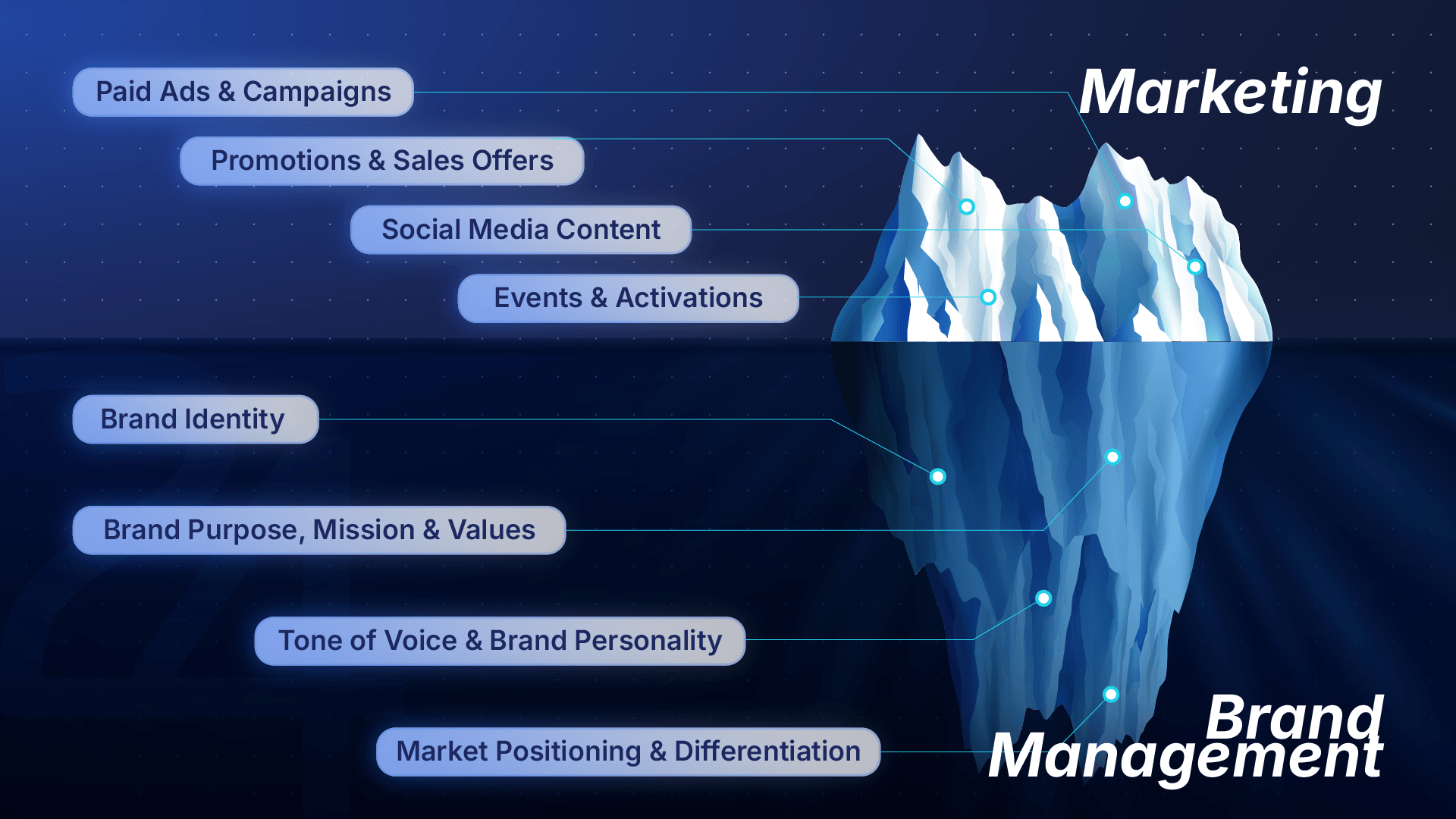
Brand Management establishes the "True North," or the strategic and philosophical direction of the brand, while Marketing acts as the engine that activates this direction through tactical channels and campaigns.
Both functions overlap and are mutually dependent: Marketing drives short- and medium-term customer acquisition, but it must always operate strictly within the boundaries set by Brand Management to ensure brand equity is never diluted.
Why is Brand Management Important for Business Growth?
Effective Brand Management goes far beyond maintaining a visually appealing logo; it is a strategic driver of measurable business growth. When executed correctly, it can impact your financial performance through the following outcomes:
- Builds recognizable and consistent brand perceptions: Consistency across all your touchpoints accelerates brand recall. From a business perspective, this reduces your Customer Acquisition Cost (CAC) because recognizable brands require less advertising spend to convert prospects into buyers.
- Strengthens trust and customer loyalty: Brands that consistently deliver on their promises build deep emotional connections. This translates directly into higher Customer Lifetime Value (LTV), reduced churn, and a more predictable, recurring revenue stream.
- Supports differentiation from competing brands: In saturated markets, clear positioning helps you stand out from the noise. This differentiation gives your business "pricing power," allowing you to charge a premium for your products or services without losing market share to cheaper alternatives.
- Protects and develops brand equity over time: Brand equity is a financial asset. By actively managing and protecting your reputation, you increase the intangible valuation of the entire company, which is crucial for attracting investors or preparing for an acquisition.
- Gives internal teams clearer brand direction: A strong brand strategy doesn't just face outward; it drives internal branding and employee engagement. When employees understand your brand's core values, it unifies the corporate culture and ensures that everyone—from sales to customer support—acts as a cohesive brand ambassador.
What are the Key Elements of Brand Management?
If you want to master Brand Management, you must stop treating it as a collection of logos and ad campaigns. It is a cohesive business system.
In order to build a category-leading brand, you need to deeply understand and synchronize its core pillars. Here is a breakdown of the seven key elements of Brand Management, using Spotify as a masterclass in strategic execution:
Brand Positioning
Defines your exact target audience and articulates your Unique Value Proposition (UVP) to differentiate your brand.
For example, Spotify doesn't compete merely by claiming to have the largest song catalog; they own the mental territory of "hyper-personalized music discovery." Their positioning isn't just about providing music, but understanding your tastes better than you do (as proven by their algorithm and Spotify Wrapped), clearly differentiating them from competitors that function simply as static audio libraries.
Brand Identity
The visual and verbal manifestation of your strategy, which is essentially the "face and voice" of the company. It encompasses your logo, color palette, typography, imagery, and tone of voice. A structured identity is what transforms a simple document into an authoritative asset.
For Spotify, this identity is instantly recognizable: their signature neon green, the elegant dark-mode interface, bold typography, and a casual, music-loving tone of voice.
Brand Consistency
Ensures omnichannel recognition by aligning all internal teams around the exact same rules. A brand is like a person: if it changes its personality, colors, or style every time it speaks to you, it drives deep mistrust. Maintaining this cohesion prevents dreaded "Franken-decks" and builds market trust.
Using the same example, for Spotify, whether you are using the mobile app, looking at a highway billboard, or reading a promotional email, the visual language and attitude are unmistakably identical.
Brand Promise & Brand Experience
Guarantees that every customer touchpoint, from onboarding to technical support, actively delivers on your core Brand Promise. If your brand creates the promise, the customer experience provides the undeniable proof. If you market yourself as a "premium" B2B solution, your support response times must feel equally exclusive.
For Spotify, their explicit Brand Promise is to provide "the right music or podcast for every moment." Therefore, their user experience must be frictionless and highly adaptive. Features like seamless cross-device playback and flawlessly curated situational playlists are the actual, tangible proof that they deliver on this promise.
Brand Measurement & Brand Equity
Involves the continuous monitoring of brand awareness, customer perception, and loyalty. The ultimate goal of this measurement is to audit and protect your Brand Equity. Equity acts as the "credit score" of your reputation: the higher and more consistent it is, the more intangible financial value you accumulate.
For Spotify, high Brand Equity gives them the power to maintain their Premium subscription fees and market dominance, even when tech giants like Apple or Amazon offer competing platforms. For example, this success is measured through subscriber retention and viral social engagement during Spotify Wrapped.
One Design Partner
From infographics and reports to full marketing collateral, built on demand.
What are the Different Types of Brand Management?
Brand Management is a broad discipline that, depending on the size and complexity of an organization, is often divided into highly specific areas of specialization.
Discover more about these core branches below:
Strategic Brand Management
Focuses on long-term positioning and building overall brand value. Its primary function is to ensure that all tactical branding decisions are perfectly aligned with the overarching commercial strategy and financial goals of the company.
Brand Reputation Management
Closely monitors how customers, investors, and the general public perceive the brand. The objective is to identify negative perceptions early and proactively respond to risks or media crises that could weaken market trust.
Brand Asset Management
Centralizes and organizes all approved design files along with the corporate style guidelines. This technical management is vital to ensuring that internal teams and external agencies use up-to-date resources consistently, preventing unauthorized visual alterations.
Digital Brand Management
Strictly maintains brand consistency across all digital ecosystems. This encompasses the website user experience, social media tone of voice, email design, and all online corporate communications.
Brand Portfolio Management
Operates at a higher strategic level to help organizations determine which brands should exist, what role each one plays, and how the entire collection should evolve as business strategy changes.
It is not simply a list of logos on a webpage; it requires active management of the relationships between multiple brands to maximize market share without cannibalizing internal sales.
The Core Framework: 3 C's and 5 P's of Brand Management
To build a solid brand, you do not need to overcomplicate the theory.
The most effective Brand Managers rely on two foundational frameworks to keep their strategy focused and aligned. Let's break them down:
The 3 C's of Brand Management
| C | WHAT TO CONSIDER? |
|---|---|
| Customer | What does the audience need and value? |
| Company | What can the brand credibly deliver? |
| Competitors | What makes the brand distinctive? |
The 5 P's of Brand Management
| P | WHAT TO CONSIDER? |
|---|---|
| Positioning | Where does the brand sit in the competitive market landscape? |
| Promise | What should customers consistently expect when interacting with your business? |
| Personality | How does the brand behave, speak, and communicate its values? |
| Presentation | How does the brand appear visually across all physical and digital touchpoints? |
| Performance | Does the brand actually deliver on its initial promise? |
How does a Brand Manager apply the 3Cs and 5Ps in practice?
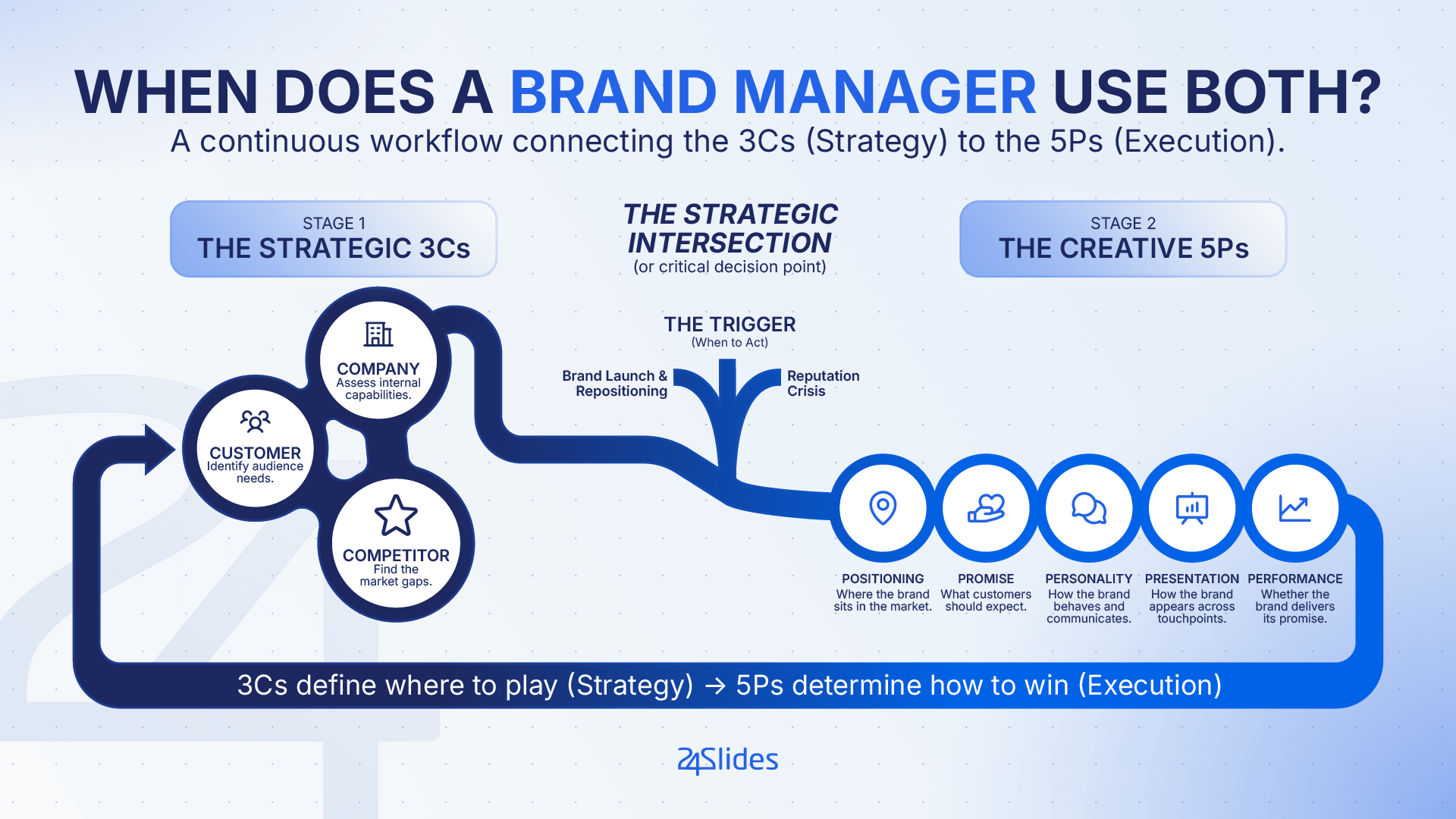
To apply the 3Cs and 5Ps frameworks concisely and operationally, you must use them as a two-phase process: first, you define the strategy, and then you execute the tactics.
Phase 1: Apply the 3Cs to define the Strategy (Where to play)
- Customer: Identify the primary need or unresolved problem of your audience.
- Company: Audit your internal strengths to know exactly what solutions you can realistically offer.
- Competitor: Analyze your rivals to find the gaps they are failing to cover in the market.
- Practical application: Your winning territory is the exact point where your Customer's needs intersect exclusively with your Company's strengths, deliberately avoiding what the Competitor already offers.
Phase 2: Apply the 5Ps for Execution (How to win)
- Positioning: Take that competitive advantage and plant it in the consumer's mind as your unique territory.
- Promise: Translate your positioning into a clear commercial commitment to the client.
- Personality: Define the corporate character and tone of voice you will use to humanize and communicate that promise.
- Presentation: Showcase your personality through consistent logos, colors, and presentations across all your touchpoints.
- Performance: Measure real market results to verify if the final customer experience actually fulfills the initial promise.
How Does Brand Management Work in Practice? (The Practical Process)
We want to follow the line of how to use theoretical Brand Management in real life.
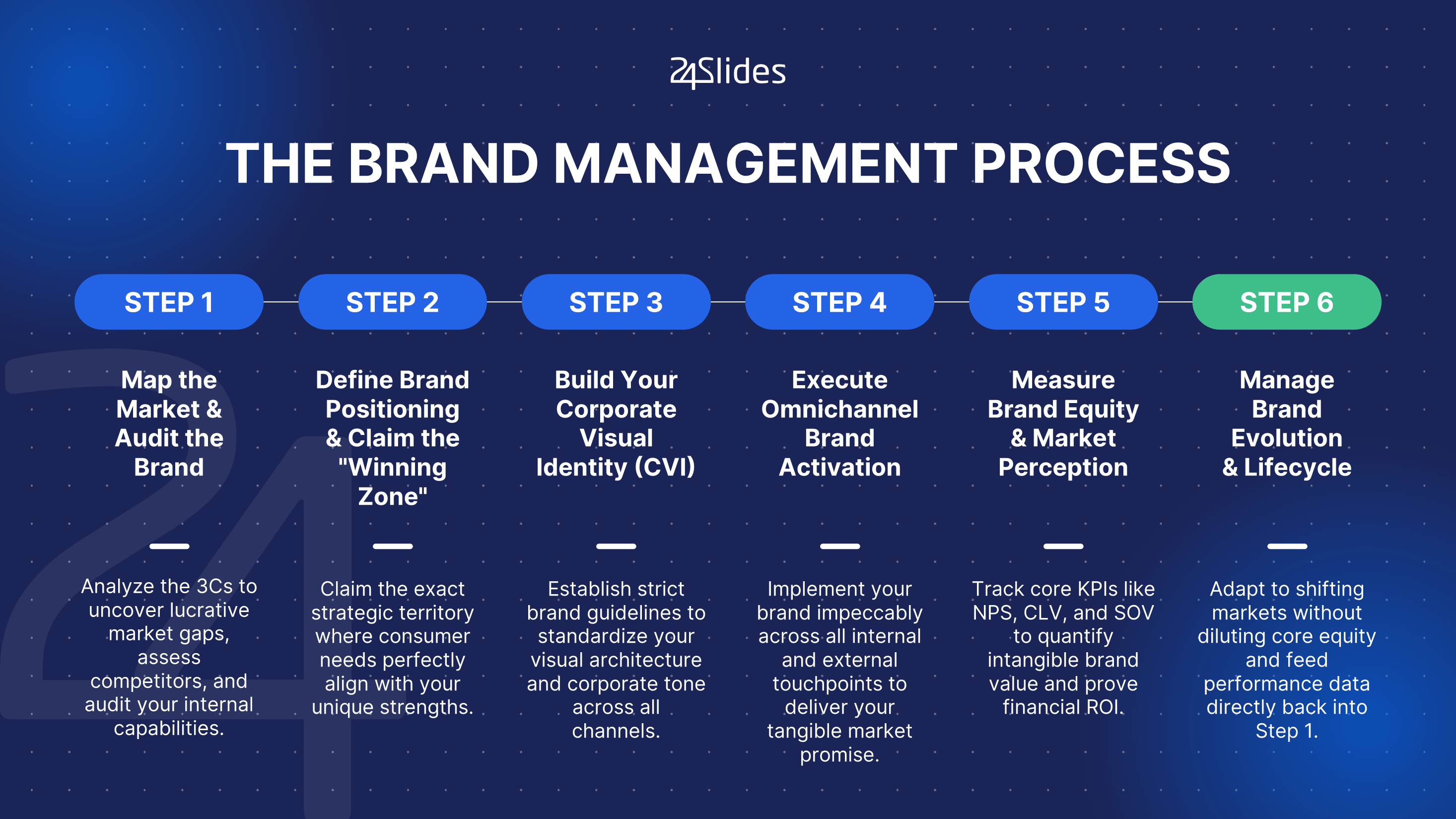
While frameworks are useful, they only generate financial value when executed properly. Here is a step-by-step guide to putting the theory into practice:
Step 1: Map the Market & Audit the Brand
Everything starts with the 3Cs (Customer, Company, Competitor). Before making any strategic moves, you must analyze these three core elements to build a solid foundation.
This stage requires a deep dive into your market environment to identify lucrative gaps and uncover unmet consumer needs. Simultaneously, you must objectively assess competitor strengths and audit your internal capabilities. Gathering this intelligence ensures your brand enters the battlefield fully prepared rather than relying on guesswork.
Step 2: Define Brand Positioning & Claim the "Winning Zone"
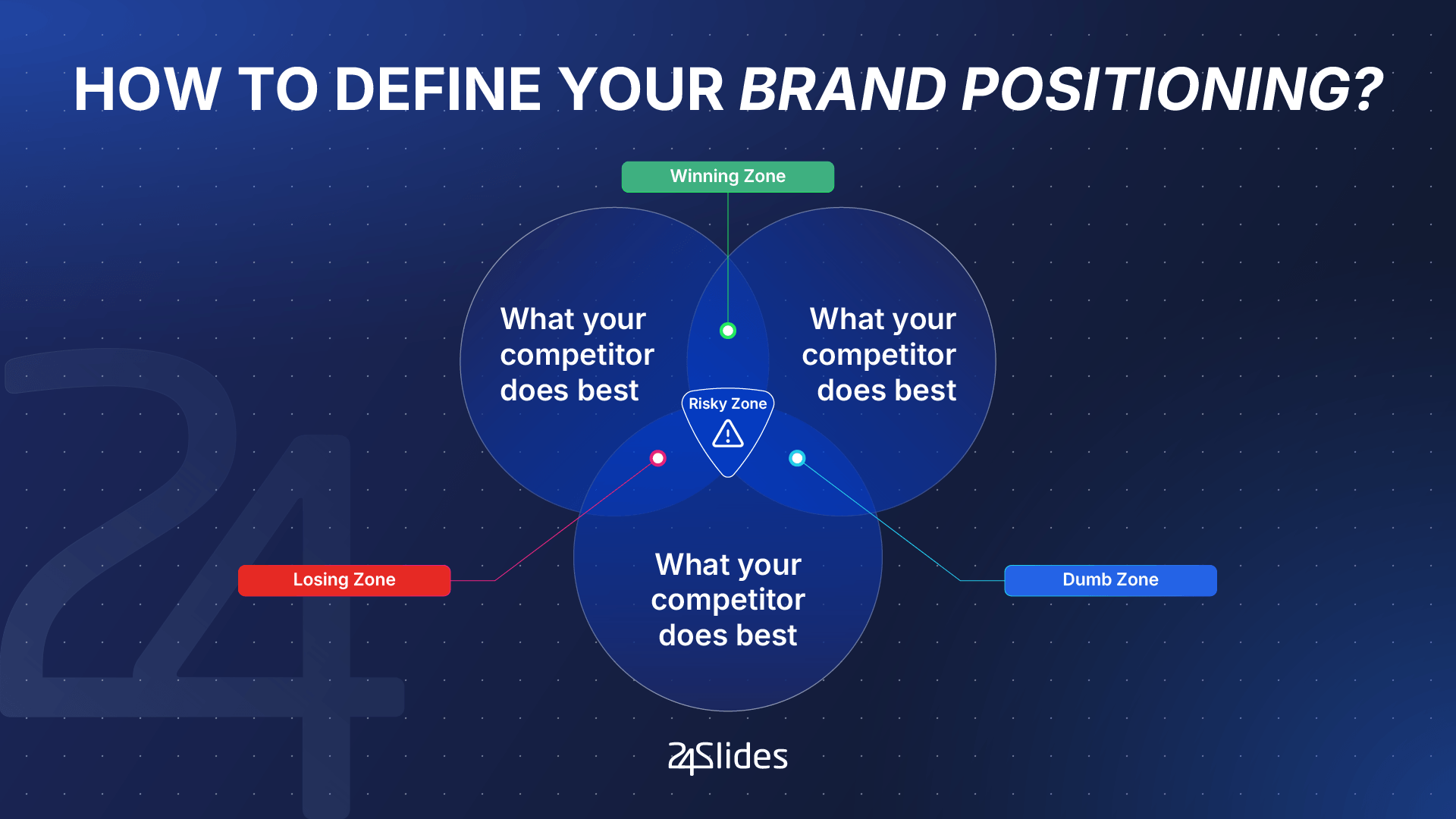
This is where you activate your first "P" (Positioning). Finding your exact value proposition requires mapping your brand against four distinct strategic zones:
- The Winning Zone: Where consumer needs perfectly overlap with what your brand does best, and competitors cannot match you.
- The Losing Zone: Where consumer needs overlap with what your competitors do best. If you compete here, every marketing dollar simply reminds people of your rival.
- The Risky Zone: Where you and competitors are tied in meeting basic needs. You can win this tie, for example, by claiming an emotional benefit your competitor ignores.
- The Dumb Zone: Where you battle over features consumers do not care about. Arguing over internal specs that mean nothing to the buyer is never a competitive advantage.
Once you successfully claim your Winning Zone, you must translate that internal strategic territory into an external Brand Promise. If your positioning dictates where you stand in the market, your promise dictates what your customers can consistently expect you to deliver.
For example, if your Winning Zone positions you as a "premium" B2B solution, your Brand Promise is the operational guarantee of exclusivity, meaning your support response times and service quality must feel equally premium.
Step 3: Build your Corporate Visual Identity (CVI)
Here you define your Personality and Presentation. Once your positioning is clear, you must translate your strategy into a cohesive visual architecture.
This requires establishing strict Brand Guidelines that dictate exactly how your company looks and sounds across all channels. You need to standardize typography, define the corporate tone of voice, establish logo usage rules, and document your core brand personality to ensure absolute consistency and prevent both internal departments and external partners from diluting your identity.
Step 4: Execute Omnichannel Brand Activation
This crucial step turns your strategic planning into a tangible Promise for the market. You must implement the brand impeccably across all internal and external touchpoints, and ensure that your tactical execution aligns perfectly with the core strategy in every single area of the business.
This means your brand identity must be visible and consistent across all touchpoints, from public trade marketing promotions and digital advertising campaigns to internal employee onboarding programs.
Step 5: Measure Brand Equity & Market Perception
This aligns directly with the final "P" (Performance). The Brand Management process does not end after a successful launch. You must systematically monitor your brand health metrics to understand real market impact.
Tracking key performance indicators such as Share of Voice (SOV), Customer Lifetime Value (CLV), and Net Promoter Score (NPS) allows your team to quantify the intangible financial value the brand generates over time and demonstrate ROI to executive stakeholders.
Step 6: Manage Brand Evolution & Lifecycle
Markets are constantly shifting, and a strong brand must adapt to new consumer behaviors without cannibalizing its core equity or diluting established recognition.
A skilled Brand Manager knows exactly how to iterate and refresh the visual identity to stay relevant. To keep this management cycle alive and effective, the performance data gathered in Step 5 must feed directly back into Step 1 to update your market audit.
Real-World Brand Management Examples
A strategy is just a theory until it survives the open market.
Let's step away from the whiteboard and see how global industry giants actually use these Brand Management branches to solve complex business challenges and drive real growth.
Strategic Brand Management: How Apple Builds a Premium Ecosystem
The company does not make decisions based solely on current technology trends but rather on its long-term positioning as a premium, intuitive ecosystem.
When they decide to remove the headphone jack or develop their own processing chips, they are not looking for an immediate tactical gain. Instead, they perfectly align design and technology with their commercial strategy to generate absolute loyalty and maintain exceptionally high profit margins.

Brand Reputation Management: How Airbnb Protects Market Trust
In 2019, following a tragic shooting at an unauthorized party in California, Airbnb faced a crisis that forced it to redefine the control of its ecosystem. To mitigate reputational risk, the company banned party houses and implemented structural changes to its core product. These included predictive algorithmic filters to block high-risk reservations, 24/7 neighborhood support, and a permanent global ban on parties.
This management approach proactively mitigates security threats and regulatory risks, reinforced by measures such as the AirCover guarantee and the City Portal software for local governments. Airbnb proves that reputation is protected through hard operational actions rather than PR statements, ensuring a safe environment that sustains its market value.

Brand Portfolio Management: How P&G Prevents Internal Cannibalization
P&G manages a massive collection of brands operating under a strict multi-brand strategy. They know exactly what role each one plays to avoid cannibalizing their own sales.
For example, they position Tide as a premium, high-performance detergent for daily laundry, while Gain focuses intensely on the scent experience, and Dreft specializes exclusively in baby clothes. By segmenting the market with clear commercial roles for each brand, they maximize total market share without competing with one another.

How Presentations Drive Effective Brand Management?
Presentations are often the most frequently used brand assets in any business. Whether they are facing outward to clients or inward to your team, slide decks are a constant visual representation of your company.
Here are a few practical examples of how everyday slides directly impact your Brand Management strategy:
- Sales Decks and Pitch Presentations: Your sales deck is usually the very first impression a prospect gets of your company. When the design is polished and strictly follows your official brand colors and typography, it instantly builds trust. If your slides look premium and organized, the client will naturally assume your product and services are too.
- Internal Meetings and Employee Onboarding: The way you present information to your own team actively shapes your company culture. Human Resources onboarding decks and quarterly all-hands meetings are critical moments to show your employees exactly what the brand stands for. Good internal branding turns employees into true brand ambassadors.
- Performance and Investor Reports: When you are showing financial numbers or project milestones to executives and investors, the design of those slides communicates stability, competence, and authority. A strong, confident brand identity should be clearly visible even in a complex financial chart.
- The Power of Corporate Templates: Brand guidelines only work if people actually use them. Providing your team with ready-to-use corporate templates is the absolute best way to maintain visual order. It prevents different departments from inventing their own layouts, going off-script with random fonts, and creating inconsistent presentations that dilute your brand image.
Presentation Count.
Get reliable, brand-trained design capacity whenever you need it.
Never let internal bottlenecks ruin a high-stakes pitch.
Frequently Asked Questions (FAQ) about Brand Management
What is the difference between Branding and Brand Management?
Branding is the initial process of creating a brand identity, which includes designing the logo, defining the tone of voice, and setting the market positioning. Brand Management is the ongoing strategic maintenance of that brand. While branding builds the foundation, Brand Management ensures the brand remains relevant, visually consistent, and profitable over time.
What does a Brand Manager do?
A Brand Manager acts as the guardian of a company's public identity and market perception. Their primary responsibilities include overseeing marketing campaigns to ensure visual consistency, analyzing competitor trends, tracking brand equity, and guiding cross-functional teams so that every customer touchpoint aligns perfectly with the core brand promise.
What is the difference between a Brand Manager and a Product Manager?
A Brand Manager focuses on market strategy, overall brand equity, and the emotional connection the audience has with the company. A Product Manager focuses on the internal development, functionality, and lifecycle of a specific product. In short, the Product Manager builds the solution, and the Brand Manager ensures the target audience trusts and desires that solution.
What is the difference between a Brand Manager and a Creative Director?
A Brand Manager focuses on market strategy, overall brand equity, and the emotional connection the audience has with the company. A Creative Director focuses on the artistic execution, design systems, and visual storytelling. In short, the Brand Manager dictates the strategic message needed to drive business goals, and the Creative Director decides exactly how that message should look and sound to captivate the audience.
What are common challenges of Brand Management?
The most common challenges in Brand Management include maintaining visual consistency across multiple global channels, preventing internal teams from creating off-brand materials (such as Franken-decks), and accurately measuring the financial ROI of intangible brand assets, such as corporate reputation.
What is a Lovemark in Brand Management?
In Brand Management, a Lovemark is a brand that has achieved consumer loyalty beyond reason through a profound emotional connection. Coined by advertising executive Kevin Roberts, the concept argues that emotions ultimately drive consumer decisions and foster long-term loyalty. When a Brand Manager successfully builds this deep bond, the company transcends normal market competition, transforming into a Lovemark that customers will passionately defend regardless of price or alternative options.
Stay up to date with our latest branding content: