Corporate Brand Identity in Presentations: Why It Matters and How to Apply It?

When talking about corporate brand identity, most people immediately think of logos and color schemes. But there is more: your brand identity encompasses all the sensory elements that build your brand and make it identifiable in the marketplace.
This identity is commonly reflected in your logo, typography, voice tone, website design, merchandise, advertisement, and so on. However, many companies waste an outstanding opportunity for their brand image to shine: business presentations!
In many ways, a presentation is an introduction card to your potential clients. This is where your corporate brand identity plays a critical role: make your business presentations more memorable and effective. As Scott Cook, co-founder of Intuit, said:
“A brand is no longer what we tell the consumer it is; it is what consumers tell each other it is.”
What is Corporate Brand Identity?
Brand identity is the ensemble of visual, verbal, and experiential elements strategically chosen to represent your brand. These are the components that bring your brand to life, communicate what it stands for, and make it recognizable and memorable in the marketplace.
The ideal outcome of a strong brand identity is to build a distinctive position in the minds of your consumers, potential partners, and other stakeholders. In other words, it helps people recognize not only what your brand looks like, but also what it stands for and what they can expect from it.
But when we talk about a corporate brand, brand identity takes on a broader organizational dimension. Corporate brand identity is the application of these identity principles across the entire organization and its different touchpoints, ensuring the brand is expressed consistently across presentations, websites, reports, marketing materials, internal communications, and other corporate channels.
Example of Corporate Brand Identity: Apple
A great example of this concept is Apple.
The company is recognized not only by its visual identity, but by how consistently its corporate brand identity is expressed across its products, stores, packaging, presentations, and customer experience.
From its minimalist design and recognizable logo to the way its products are packaged and presented, these touchpoints work together to communicate a cohesive brand.
These seemingly small interactions reinforce the same identity at every stage of the customer journey, strengthening brand recognition, consistency, and awareness over time.
Steve Jobs put it simply:
“Design is not just what it looks like and feels like. Design is how it works.”
This idea goes beyond aesthetics. A strong corporate brand identity should work consistently across every touchpoint, helping people recognize your company and understand what it stands for.
Main Components of Brand Identity
Building your corporate brand identity is not something that happens overnight. Each element needs to be carefully planned and developed before launching your brand or company.
Let’s take a look at some of its key components:
- Mission and vision: The mission focuses on what your brand does today, while the vision describes the long-term impact you want to generate in the world.
- Brand story: Tell the story behind your brand—where it comes from, why it exists, and what motivates it. A strong brand story creates an emotional connection and gives people a reason to believe in and engage with the brand.
- Brand personality and archetypes: Defines the human characteristics and traits associated with the brand. It shapes how the brand behaves and feels, whether it is bold, approachable, innovative, trustworthy, playful, or sophisticated.
- Visual identity: Translates the brand into a recognizable visual language. It includes elements such as the logo, color palette, typography, imagery, graphic elements, and overall design system, ensuring consistency across every touchpoint.
- Sensory identity: Extends the brand beyond visuals by engaging the other senses. It can include sounds, scents, textures, tastes, or physical experiences that help create a distinctive and memorable brand presence.
- Communication style: Defines how the brand expresses itself through words and interactions. It establishes the tone of voice, language, messaging principles, and conversational style used across channels, making the brand feel consistent and recognizable.
Brand vs. Branding vs. Brand Identity: What’s the Difference?
So far, the definition of brand identity might bring to mind the word “branding” or just “brand.”
But are all these concepts synonymous? Well, many people can use it as such, but in reality, each one has its own meaning:
| Term | Definition | Example |
|---|---|---|
| Brand / Brand Image | The set of perceptions, associations, and ideas that consumers have about your company. It reflects how your brand is perceived in the minds of your audience. | What people say about 24Slides — customer reviews, ratings, and feedback reflect how the brand is perceived by its audience. |
| Branding | The strategic actions and activities used to shape, strengthen, and amplify positive perceptions of your brand across different touchpoints. | 24Slides’ branding strategies across social media and other touchpoints help shape how the brand is perceived. |
| Brand Identity | The sensory and expressive elements that define your brand and make it recognizable in the marketplace, helping shape and reinforce your brand image. | 24Slides’ brand book, which defines elements such as its visual identity, colors, typography, and other brand guidelines. |
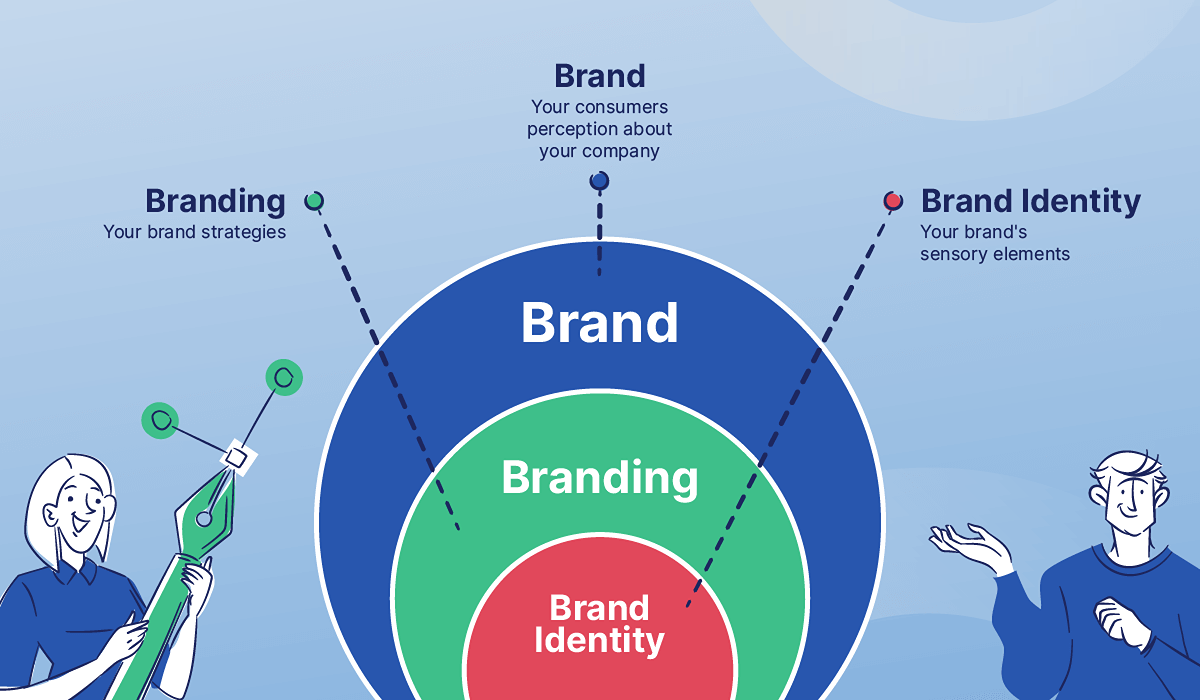
Although you can't control your final brand image, all your brand elements need to be cohesive so you can be recognizable at first glance (as Apple masters to do).
With this information, we're sure you will recognize the difference between brand, branding, and brand identity.
Why Corporate Brand Identity Matters in Business Presentations?
In a presentation, your corporate brand identity—from your logo and colors to your typography, imagery, and layout—should seamlessly come together to create a cohesive brand experience.
1. Elevates Professionalism and Establishes Credibility
First things first: an on-brand presentation can strengthen the impression of how professional and prepared your company appears. Considering your corporate brand identity when designing a presentation creates a cohesive visual experience, which can inspire confidence in your audience.
It also communicates attention to detail. When your presentation follows established brand guidelines rather than relying on generic templates, it shows that your team takes its communication—and its brand—seriously.
2. Translates Your Core Values into Visual Design
Your presentation is another opportunity to communicate what your company stands for. Applying your corporate brand identity can help translate your brand personality and values into visual choices that your audience can experience.
For example, bright colors and dynamic illustrations can communicate a sense of fun and creativity, while a clean, minimalistic style may convey a more sophisticated or serious personality.
Ask yourself:
- What do you want your audience to think when they hear your brand name?
- What values and ideas would you like to emphasize in your presentation?
- What is your brand voice, and how can you reflect it visually?
A well-designed branded presentation can communicate these ideas without having to spell them out.
3. Drives Recognition Across Every Touchpoint
Your presentation is one of many places where people interact with your company. Applying your corporate brand identity consistently helps create a recognizable experience across different brand touchpoints.
When your logo, colors, typography, imagery, and other visual elements follow the same system, potential customers and partners can recognize your company at a glance.
Think about Apple: its visual identity remains recognizable across its products, stores, packaging, and other customer experiences. Your presentations may not have the same global reach, but the principle is the same: consistency helps people recognize and remember your brand.
4. Enhances Audience Engagement and Message Retention
A presentation is more than a collection of slides; it is an opportunity to create an experience for your audience. Thoughtful use of your corporate brand identity can make that experience more distinctive and easier to associate with your company.
Consistent colors, typography, imagery, and other recognizable brand elements can help your audience connect the information they see with your company. When these elements are applied intentionally rather than decoratively, your presentation deck can leave a stronger impression long after the meeting ends.
5. Elevates Your Brand Above Generic Templates
Regardless of your industry, your audience is likely exposed to presentations from companies offering similar products or services. A distinctive corporate brand identity can help your presentations feel more recognizable rather than look like other generic business decks.
Your visual identity gives you a way to put your company's character into how you communicate—from the colors and imagery you use to how information is structured and presented.
A cohesive brand identity, therefore, is not just about creating a modern-looking presentation. It is a strategic tool for building brand recognition and differentiation over time.

If you have read each point conscientiously, you already understand more about why branded presentations are important for your company.
Now it's time to learn how to make it a reality in practice. Stay tuned!
The 5 Elements That Define Brand Identity in a Deck
The best way to incorporate your brand identity into your business presentations is to follow your brand playbook or guidelines. This may sound very easy, but it could be really challenging in practice.
Want to learn more about how to apply your brand identity in your presentation decks? Let's see what Valery Salome and Ridho Fadhlurrahman, Graphic Designers at 24Slides, say about the subject:
1. Custom Templates and Slide Masters
Top-tier design teams, including the experts at 24Slides, rely on master templates to streamline their entire workflow.
Simply put, a master template is the foundational blueprint of your presentation, acting as a central control center that defines your brand typography, color schemes, and layout rules for every single slide.
By using one, you eliminate repetitive manual formatting, ensure absolute visual consistency, and protect your brand identity no matter who edits the deck.
Valery has a suggestion about this part:
"Incorporate your brand's distinct visual elements subtly but effectively into your slides. This reinforces your brand presence and establishes a visual connection with your audience."
2. Color Palette and Typography
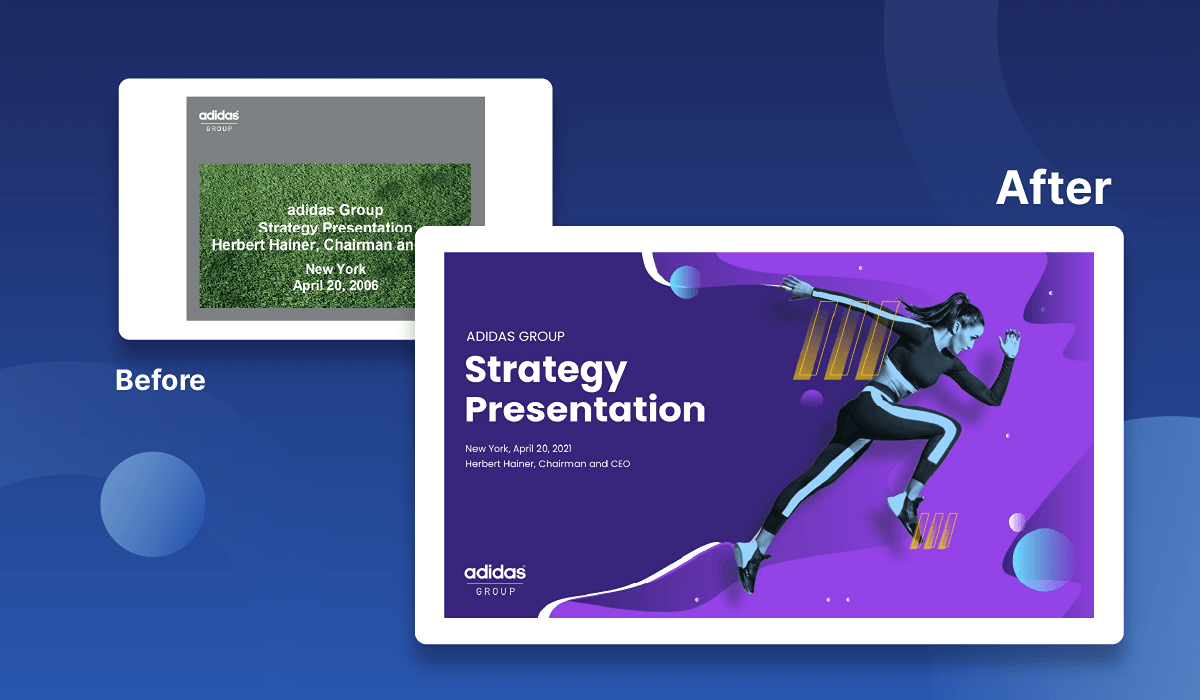
Your color palette and typography form the core of your brand guidelines, so they need to anchor every single presentation you build.
To achieve a captivating and cohesive design, infuse your palette thoughtfully across all slides. Apply your brand colors with intention to text, backgrounds, and data visualizations, ensuring even your images match the overall mood.
Just as importantly, stick to your brand's approved typefaces. Using consistent fonts builds instant recognition and keeps your text easy to read on screen. As a best practice, limit your deck to two font families to keep your slides looking sharp and uncluttered.
Ridho emphasizes that:
"Color is what makes the visual stand out. A consistent color scheme can help your target audience easily recognize your brand. This can be achieved through backgrounds, text, headers, images, vectors, and more design elements."
3. Custom Imagery and Icon Libraries
Elevating your business presentations above the competition requires moving away from generic stock photos and integrating unique visual assets. Whether you invest in custom brand photography or original illustrations, authentic visuals immediately set your slide deck apart.
Naturally, developing custom assets requires more time than downloading pre-existing images online, but the long-term benefits across all your marketing collateral makes it well worth the effort.
To go the extra mile, establish a cohesive graphic theme by answering a few key design questions beforehand:
- Will your deck rely primarily on custom illustrations or photography?
- What specific artistic style will define your visual elements?
- Do your images share a consistent color treatment or filter?
Alongside imagery, incorporate a standardized icon library that reflects your brand’s geometry—whether sharp and linear or rounded and friendly.
Valery points out that:
"Customizing graphic elements adds authenticity and relevance to your presentation. If these are important values for your brand, you should find innovative ways to reflect them in your presentations."
The more uniform these visual elements are, the more polished and professional your branded presentation will look. Do not forget that!
4. Chart and Data Visualization Formatting
When it comes to business presentations, incorporating charts or data diagrams is practically inevitable. However, your visual identity shouldn't stop at text and backgrounds—it must extend seamlessly into your data visualization.
To keep your slides looking sharp and professional, try to keep your charts clean and clutter-free. Make sure the text on your graphs matches the fonts used in the rest of your presentation, and use your official brand colors to make key data points stand out.
5. Visual Hierarchy
Visual hierarchy is one of your most powerful weapons for creating memorable presentations.
Strong visual hierarchy guides your audience's eyes effortlessly through your slides, ensuring crucial data and key takeaways stand out immediately. Designing with intention keeps the presentation's narrative flowing smoothly from one point to the next.
In order to build an effective hierarchy, leverage variations in font weight, scaling, color contrast, and whitespace. Keeping your slide design clean, deliberate, and uncluttered is the ultimate key to delivering a polished, professional presentation. After all, when it comes to corporate slide design, less is truly more.
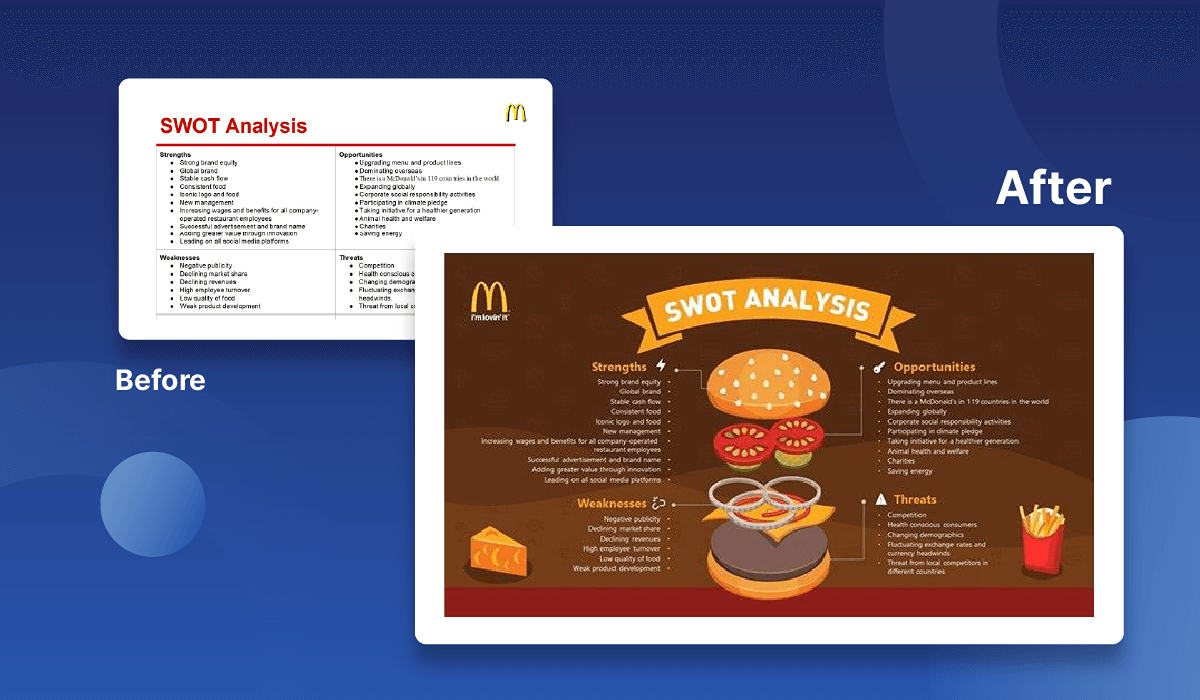
How 24Slides Applies Corporate Identity at Scale?
When it comes to scaling enterprise presentation design, global brands need more than just a rotating pool of freelance talent.
For over 10 years, 24Slides has addressed this operational challenge by integrating dedicated design teams, robust security frameworks, and enterprise-grade workflows directly into corporate infrastructures.
Here is what sets our model apart:
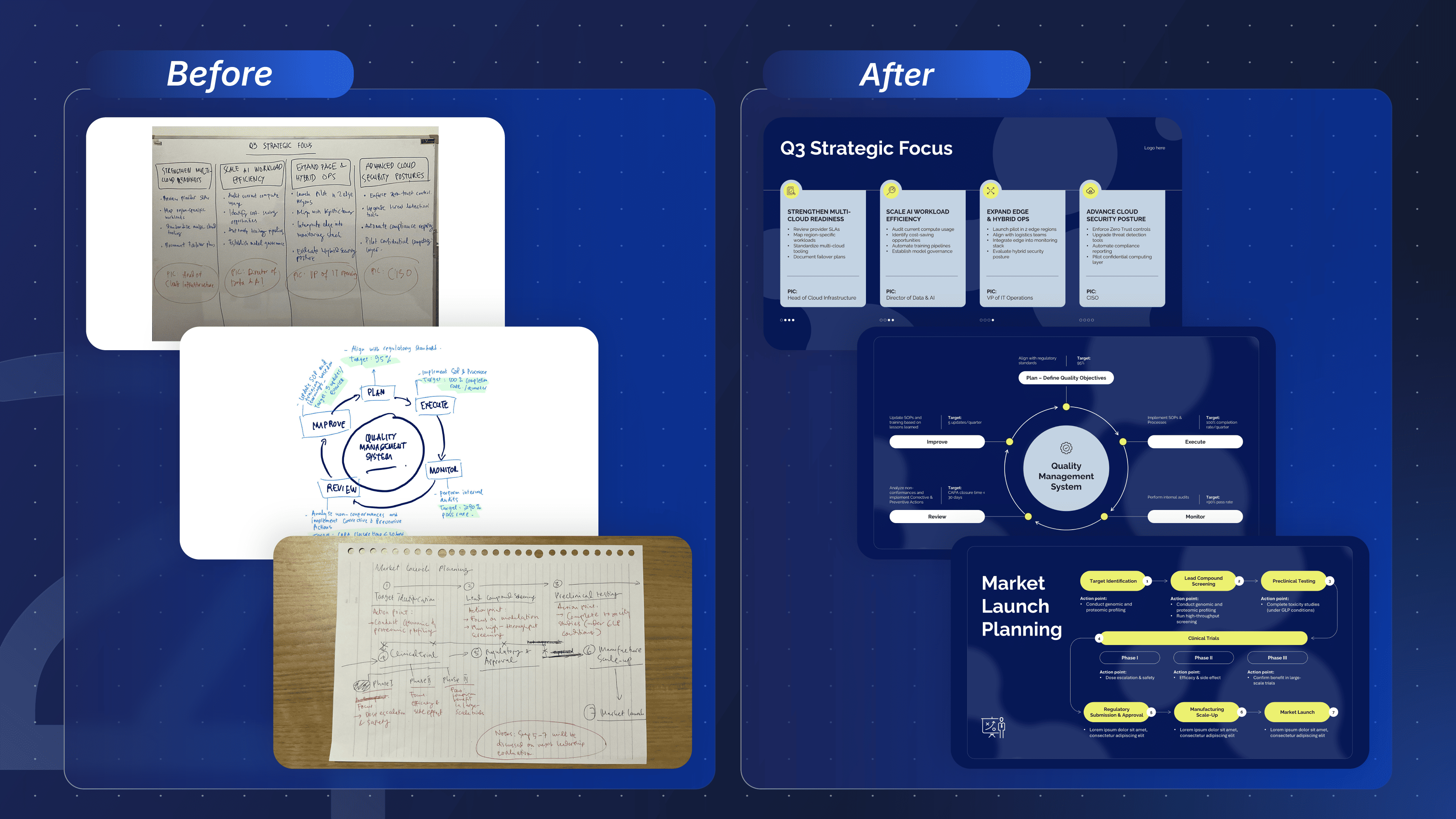
- Dedicated Design Teams and Onboarding: A dedicated designer, design manager, and project manager are trained on your brand guidelines and non-negotiables during onboarding. This is how we avoid the inconsistencies of a rotating freelancer pool.
- Guaranteed Speed at Scale: Enjoy a standard 24-hour turnaround, alongside a 10-hour priority option on Pro plans, enabled by reserved capacity and dedicated teams rather than an anonymous production queue.
- Enterprise-Proven and Compliant Workflows: Backed by global brands such as Novo Nordisk and IMD, our designers are trained on client CVIs and brand standards during onboarding, enabling MLR-compatible workflows for highly regulated industries.
- Enterprise-Grade Security and Talent: Built on SOC 2 compliance, mandatory NDAs, and 100% in-house full-time employees across Denmark, Indonesia, and Peru (200+ designers), ensuring no external freelancers ever touch your brand assets.

In-House Design Team vs. Dedicated Design Team: Which is the Right Fit for You?
Every company is complex and has unique needs. At 24Slides, we want to help you make the right decision for your success.
Comparative Table: In-House Design Team vs. Dedicated Design Team (Outsourcing)
| Criteria | In-House Design Team | Dedicated Design Team |
|---|---|---|
| Team setup | Designers are hired as part of your company and work internally. | An external team works exclusively or primarily on your company’s design needs. |
| Control | High: You have direct control over projects, priorities, and workflows. | High: You maintain close control through dedicated resources and ongoing collaboration. |
| Brand knowledge | High: Designers become deeply familiar with your brand, culture, and goals. | High: A dedicated team can build strong knowledge of your brand over time. |
| Confidentiality | High: Designers are internal employees. | High: A dedicated team can provide confidentiality agreements and controlled access. |
| Hiring & training costs | High: Recruitment, salaries, benefits, onboarding, and training are ongoing expenses. | Lower: No need to hire and train individual full-time designers internally. |
| Scalability | Can be slower and more expensive to scale as needs change. | More flexible: Resources can be adjusted according to project volume and business needs. |
| Long-term investment | Requires a significant long-term investment in people and infrastructure. | Provides access to design expertise without the same internal overhead. |
| Best for | Companies where design is core to the product/service and commercial performance depends heavily on the design team. | Companies with recurring design needs that want dedicated expertise without the cost and complexity of an in-house team. |
Frequently Asked Questions (FAQ)
How do you make a Brand Identity Presentation?
To create a brand identity presentation, structure your deck around your core brand pillars: start with your brand strategy and mission, introduce visual elements (logo, color palette, typography), brand voice and tone, and conclude with practical applications across media and merchandise.
Can you give an example of Brand Identity in a Presentation?
If you are looking for an example of how to maintain your brand essence throughout a presentation, you can review our latest testing of AI presentation makers. There, you will find a before-and-after comparison demonstrating the importance of verifying your brand identity across presentations and other brand assets.
What is the difference between Corporate Identity and Branding?
Corporate identity refers to the specific sensory and structural elements—such as logos, design systems, and visual guidelines—that make up your brand identity. Branding is the broader, strategic process of shaping market perception, building emotional connections, and managing your overall reputation over time.
What are the 5 P's of brand identity?
The 5 P's of brand identity are Purpose, Proposition, Presentation, Personality, and Promotion.
What are the 5 C's of branding?
The 5 C's of branding are Clarity, Consistency, Connection, Competitiveness, and Culture.
To continue learning, review this content: